

What is a CRM System?
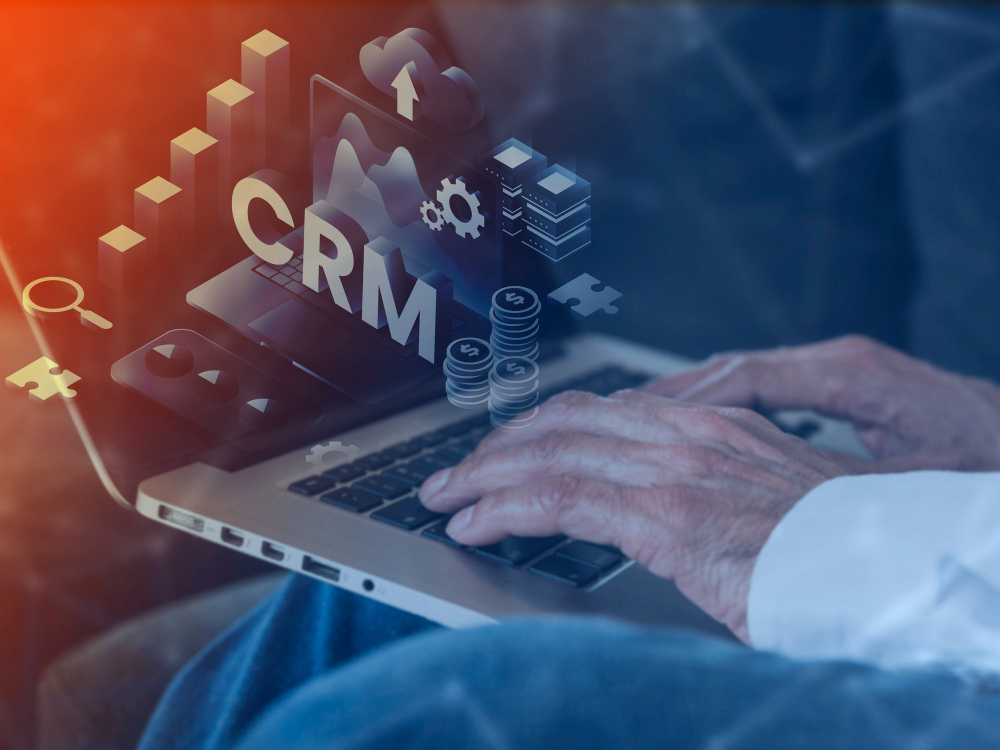
A CRM system is more than just a tool – it’s the key to building lasting customer relationships that translate into business success. How does it work, where did it come from, and why is it so important? Discover the history, types, and benefits of CRM systems, as well as their key functions and applications across industries. Learn how CRM can revolutionize your company and give you a competitive edge!
CRM – What It Is and How It Works
If you run a business, you’ve probably heard the term CRM. But what does it stand for?
CRM, or Customer Relationship Management, is software designed to improve the management of customer relationships at every stage – from acquisition and service to loyalty. A CRM system centralizes and organizes customer data while automating business processes, enabling companies to manage interactions effectively and achieve better sales results.
How Does a Good CRM Work?
A CRM gathers and stores all customer information in one place, including contact details, transaction history, preferences, and support tickets. This centralized approach allows sales, marketing, and customer service teams to quickly access essential information, better understand client needs, and provide personalized communication.
Why Customer Management Matters
Proper customer relationship management is the foundation of any successful business. Today’s market is highly competitive, and customers increasingly expect personalized, high-quality service. CRM systems allow companies not only to respond to customer needs in real time but also to anticipate future expectations.
By collecting detailed customer information – purchase history, preferences, and previous challenges – companies can build trust and long-term relationships. CRM applications centralize this data, helping businesses better understand their clients and offer solutions tailored to their unique needs.
Acquiring a new customer is often much more expensive than retaining an existing one. CRM tools help remind teams to reconnect, personalize offers, and run loyalty campaigns, increasing customer engagement. They also identify the most valuable customers and segment databases according to various criteria.
The History of CRM – From Spreadsheets to Advanced Software
Initially, customer relationship management relied on manual notes and basic spreadsheets. Over time, digital tools were developed to improve data storage and organization. By the 1990s, systems began integrating sales, marketing, and customer service functions, greatly expanding their capabilities.
The rise of cloud solutions allowed companies to access real-time data from anywhere. Modern CRM systems leverage technologies like artificial intelligence and data analytics to provide advanced support in building customer relationships. Their evolution reflects how business needs and customer expectations have changed over time.
CRM – Everything You Need to Know
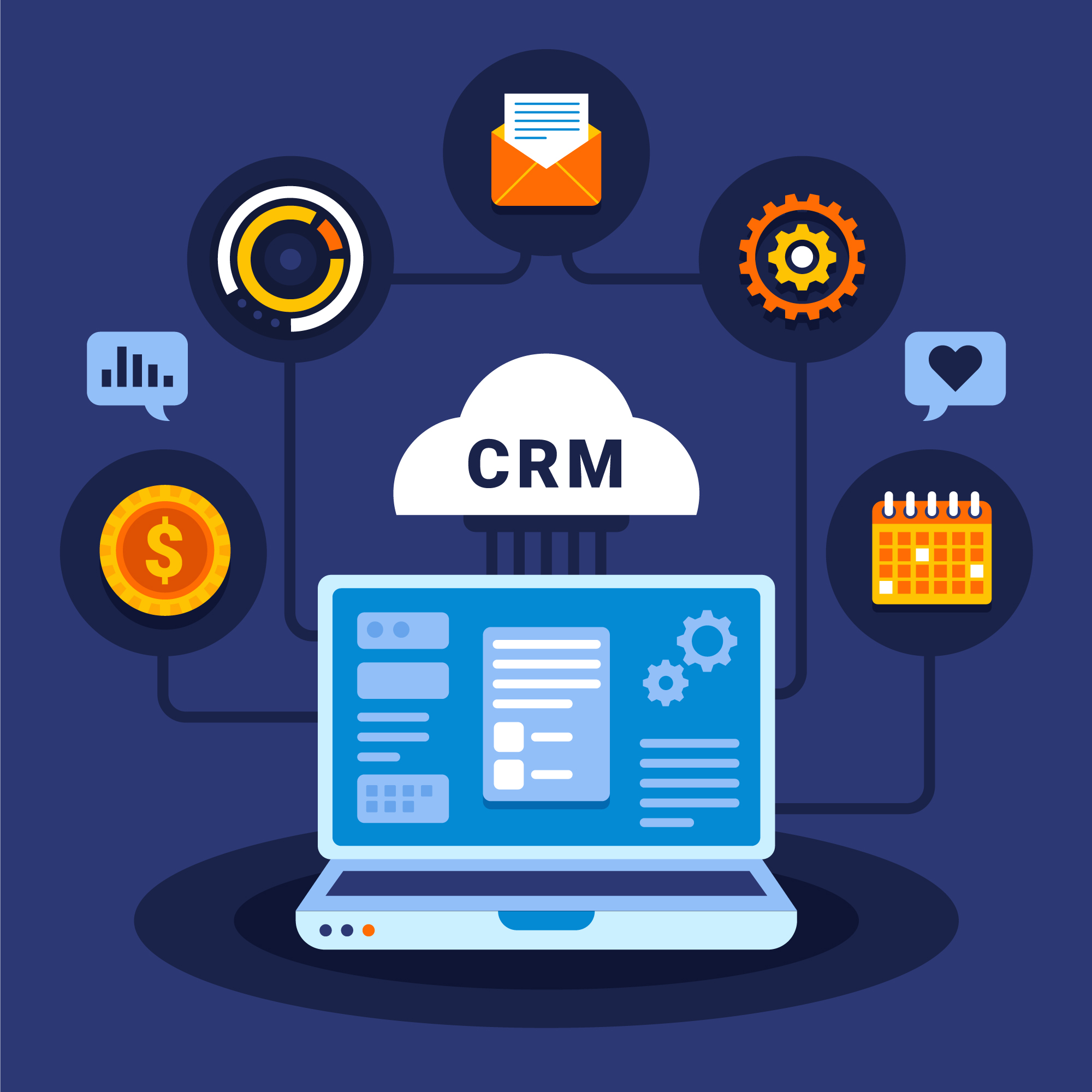
CRM solutions help businesses manage customer data more efficiently, automate repetitive tasks, and make more informed business decisions. Key areas where CRM supports companies of all sizes include:
- Customer data management – CRM creates a centralized database, eliminating the need for multiple independent tools. Every customer interaction is stored and easily accessible.
- Process automation – Repetitive tasks like email campaigns, meeting reminders, and report generation are automated.
- Analytics and reporting – Advanced analytics help monitor sales performance, identify trends, and make better business decisions.
- Integration with other tools – Modern CRM systems often integrate with project management, accounting, and e-commerce platforms to create a seamless tech ecosystem.
If you’re looking for guidance on which CRM to choose and how to implement it, read our article or schedule a free online consultation with our expert. Pick a convenient date and time – click to book!
CRM in Daily Business Operations – An Example
Imagine an electronics retailer using a CRM system. When a customer calls about product availability, the employee quickly accesses the customer’s purchase history, preferences, and previous inquiries in the central database. The system automatically sends order confirmation and suggests complementary accessories.
In the background, the CRM analyzes data and generates sales reports that help managers make informed decisions. The company not only serves customers faster and more effectively but also builds loyalty through a personalized approach.
Types of CRM Systems
CRM systems vary in deployment, functionality, and scale, allowing businesses to choose solutions that best fit their needs.
On-Premise vs. Cloud CRM
- On-Premise CRM – Installed directly on company servers, providing full control over data and configuration. Suitable for businesses with strict security requirements, but involves higher initial costs and IT maintenance.
- Cloud CRM – Accessible from anywhere via the internet, with lower upfront costs, faster deployment, and flexible updates. Potential downsides include reliance on a service provider and data storage in external data centers.
Operational, Analytical, and Collaborative CRM
- Operational CRM – Focuses on automating sales, marketing, and customer service processes. Ideal for companies improving daily operations and team organization.
- Analytical CRM – Collects and analyzes customer data, allowing businesses to predict needs and make strategic decisions. Recommended for data-driven companies.
- Collaborative CRM – Facilitates information sharing across departments and client communication via multiple channels. Best for companies prioritizing consistency and speed in communication.
Small Business vs. Enterprise CRM
Small businesses usually prefer simple, flexible, budget-friendly CRM tools, often cloud-based, offering essential customer management functions.
Enterprises need advanced systems with integrations, scalability, and sophisticated analytics. On-premise or complex cloud solutions are better suited for handling large client volumes and intricate business processes.
Why Invest in CRAZY CRM
CRAZY CRM is a comprehensive platform supporting your business operations. It simplifies customer relationship management and drives growth with modern features. Benefits include:
- Intuitive interface for easy use, even for beginners
- Personalization and scalability for small and large companies
- Advanced data security and regular backups
- Eliminates the need for multiple tools by offering a unified tech ecosystem
- Professional support and regular training to fully utilize the system
For those seeking financial benefits, CRAZY CRM offers a partner program with attractive commissions and operational support. It’s an investment combining usability, security, functionality, and professional guidance.
CRAZY CRM Across Industries
Our CRM adapts to various sectors, supporting customer database management, personalized offers, and automated marketing campaigns. Examples:
- Finance and Insurance – Builds trust through detailed data analysis and effective customer service
- Services and Manufacturing – Improves communication with clients and suppliers, project management, and demand forecasting
Even a simple CRM for a small business can revolutionize operations – from sales to data analysis, automation, and online courses – making it a versatile solution.
Investing in the best CRM improves both customer experience and internal operations. CRAZY CRM ensures strong client relationships, process automation, and increased business efficiency, delivering real benefits at every stage.
If you need guidance on choosing a CRM or inspiration for organizing your company’s operations, schedule a 30-minute consultation with us today.
Chcesz wiedzieć więcej?
Umów się na bezpłatną konsultację

Zobacz też
Crazy CRM vs Raynet CRM – Which Solution Better Supports Sales and Business Growth in 2025?
Are you wondering whether to choose Raynet CRM or Crazy CRM? Are you looking for the best CRM for your company? In this comparison, we show how both systems perform…

5 Sales Funnel Ideas for Small Businesses
A sales funnel is a key element that helps small businesses attract and convert potential clients into loyal customers. This article presents five innovative sales funnel ideas to improve your…
Best CRM for Small Business 2026: CRAZY CRM System – 2026 Ranking
In 2026, if you run a small business, you will operate in a completely different environment than a few years ago. You’ve probably noticed that customers expect fast responses, consistent…